http://pedsinreview.aapjournals.org/cgi/content/full/20/3/95?maxtoshow=&HITS=10&hits=10&RESULTFORMAT=&author1=squires&searchid=1014150405429_320&stored_search=&FIRSTINDEX=0&journalcode=pedsinreview
Upper GI Bleeding

The age of the pediatric patient aids greatly in determining the differential diagnosis.

Upper GI bleeding can manifest as hematemesis, melena, hematochezia, or hemodynamic changes (symptoms of dizziness, dyspnea or shock).

Assessment of the patient:

  1. One should first determine the amount of blood loss, and the site of bleeding.
  2. The measurement of vital signs provides the only accurate assessment of blood loss (orthostatics, heart rate, complaints of weakness or dizziness, syncope).
  3. An NG tube should be placed as part of the assessment. It can help in determining if the blood loss is from an upper GI source and remove blood from the GI tract. The gastric lavage may aid the endscopist to obtain a clear view of the bleeding site. 
Diagnosis:
  1. The first thing is to determine if bleeding is truly present. Sometimes, the source can be naso-or oropharyngeal. A careful exam of the nares and oral pharynx should be done.
  2. The presence of "coffee ground emesis represents blood altered by gastric contents and usually means that there has been slow bleeding from the region between the esophagus and the duodenum.
  3. A positive NG tube aspirate for blood usually signifies that the site of bleeding is proximal to the ligament of Treitz.
  4. Other characteristics of upper GI bleeding are elevated BUN and hyperactive bowel sounds.
  5. The source of bleeding can be identified in 90% of cases if endoscopy is done within the first 24 hours. The most common causes have been identified as gastritis, esophagitis, duodenal ulcers, and esophageal varices.
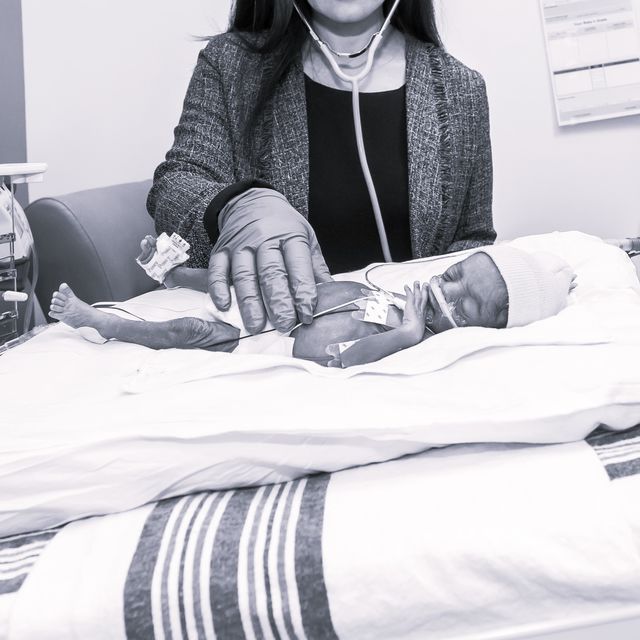
GI Bleeding in the Newborn:
  1. Quite often, the cause of bleeding is not identified and the bleeding ceases in less than 24 hours.
  2. Major bleeding may be the result of hemorrhagic gastritis or stress ulcers caused by a perinatal insult of hypoxia, sepsis, or lesions of CNS.
  3. Hemorrhagic disease of the newborn secondary to vitamin K deficiency.
  4. Swallowed water and maternal blood can appear as upper GI bleeding. To differentiate mother's from baby's blood, perform an alum-precipitated toxoid test(Apt test) - fetal blood remains pink, while maternal blood turns yellow brown.
  5. Intolerance to cows' milk and soy protein can lead to hematemesis and/or rectal bleeding. These patients usually also have elevated WBC with neutrophilia.
  6. Extraheptic portal vein obstruction leading to varices of the stomach or esophagus occurs as a result of omphalitis, secondary to catheterization of the umbilical vein, or secondary to a spontaneous inflammatory process of the umbilical blood vessels.
GI Bleeding in Infants and Children:
  1. Erosion of the gastric mucosa may occur acutely after any trauma, burn, shock or sepsis. This is usually superficial and occurs mainly in the fundus of the stomach.
  2. Deeper erosions may involve the esophagus, stomach, or duodenum, and develop more commonly after intracranial surgery and head injuries.
  3. Peptic ulcer disease can present with abdominal pain with night time awakening. In idiopathic peptic ulcer disease nearly 70% will have family history of ulcer disease. Gastric ulcers commonly cause hematemesis, and duodenal ulcers commonly cause melena.
  4. Aspirin associated gastritis has declined in incidence.
  5. Esophagitis from reflux causing hematemesis is uncommon.
  6. Bleeding from caustic agents are usually not massive. Iron ingestions can be associated with vomiting of blood.
  7. Foreign body ingestion is a rare cause of bleeding.
  8. Polyps, hemangiomas, and arteriovenous malformations of the esophagus and stomach are very rare, and even if present, hematemesis is usually not the typical presentation. 
  9. Adenocarcinoma of the gastroephageal junction or gastric mucosa is extremely rare in patients less than 18 years of age, and usually does not present with hematemesis.
  10. Intrahepatic obstruction leading to varices of the stomach and esophagus is secondary to cirrhosis developing from congenital hepatitis, hepatic fibrosis, and cystic fibrosis.
  11. Mallory-Weiss tear is a laceration of the posterior wall of the GE junction. The tear follows forceful emesis or repeated retching. These have been reported in children as young as 16 weeks of age. These usually spontaneously resolve.
Resuscitation:
  1. Typing and cross-matching of blood should be done to be prepared if necessary.
  2. Fluid depletion should be corrected with isotonic fluid, as fast as necessary to reverse orthostatic hypotension.
  3. Continuous monitoring of vital signs. Hct is not a good measure of blood volume during acute hemorrhage.
  4. If the bleeding is assessed to be severe, then the following should be considered: oxygenation, foley catheterization of the bladder, central venous line, transfusion of whole blood or PRBC, use of pharmacologic agents, intubation and ventilator support.
Reference:
  1. Ament ME. Diagnosis and management of upper gastrointestinal tract bleeding in the pediatric patient. Peds Review 1990; 12(4): 107-116.
  2. Case Records of the Massachusettes General Hospital. A five month old girl with coffee-ground emesis.  NEJM Vol. 341 No.21.  Nov.18, 1999.
  3. Squires RH. Gastrointestinal Bleeding. Pediatrics in Review. 1999; 20:95-101.
  4. Boyle J. GI Bleeding in Infants and Children  Pediatrics in Review. February 2008