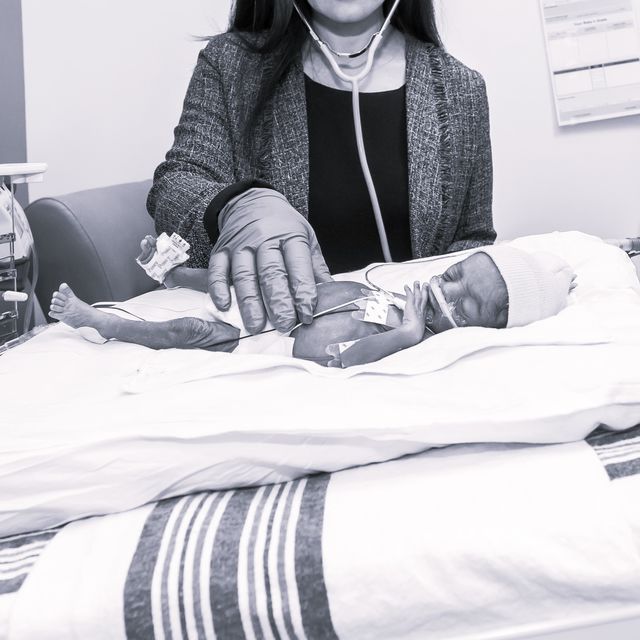

HYPOGLYCEMIA
Definition
The definition of hypoglycemia depends on the age of the child.
<55 mg/dl in children
<35-45 mg/dl in neonates
Symptoms
- Gen: Irritability, anxiety, hunger, fatigue,
- Neuro: HA, blurred vision, tremors, weakness, confusion, ataxia, stupor, seizures, coma
- GI: abdominal pain,
- Heme/CV: pallor, cyanosis, diaphoresis, tachycardia,
- Resp: tachypnea,
lethargy, ,
apnea,.
Most symptoms can be explained through stimulation of sympathetic
responses. Recurrent severe
hypoglycemic episodes can lead to brain damage and intellectual
impairment.
Important Aspects of History
- Age
- Dietary Intake: what types of food (carbohydrates, protein, etc), how soon after eating did hypoglycemia develop, amount of food intake
- Child’s PMHx
-
Family
History: sudden infant deaths, similar
problems in family
Evaluation of Suspected Hypoglycemia
(note: if possible, collect these samples
before
treatment to offer chances of earlier diagnosis)
* Venous sample for glucose, BMP (electrolytes, BUN,
Cr), LFTs,
lactate, insulin level, C-peptide, growth hormone, and cortisol levels.
*
Blood samples for substrates: FFAs,
Beta-hydroxybutarate, total and free carnitine, acylcarnitines
* Immediately begin efforts to collect urine (bagged
specimen) and send for urinalysis and urine organic acid analysis.
* Check urine for ketones and glucose.
Differential for Hypoglycemia
A good starting point for evaluating hypoglycemia is to divide patients into ketotic or non-ketotic. Normal physiologic response to decreased glucose production is increased mitochondrial fatty acid beta-oxidation and the production of ketones. Ketones provide an indirect indication of whether hypoglycemia is the result of inadequate production or of over-utilization of glucose (insulin-induced over-utilization, associated with low urine or plasma ketones). The history of the relationship of the hypoglycemia to feeding is often helpful. Hypoketotic hypoglycemia developing within several minutes of feeding is typical of hyperinsulinism. Patients with defects in glycogen breakdown, gluconeogenesis, or fatty acid oxidation tend to tolerate short-term fasting much better.
Hypoglycemia can be caused by many primary metabolic defects:
1. Idiopathic (Most common)
a. Idiopathic Ketotic Hypoglycemia
2. Inadequate Intake
3. Hyperinsulinemia
a. Congenital Hyperinsulinemia
b. Beckwith-Wiedemann Syndrome
c. Transient Hyperinsulinism
d. Relative Hyperinsulinism in Treatment of DM
e. Gastric Dumping Syndrome
f. Islet Cell Adenomas
4. Endocrine Deficiencies
a. Adrenal Insufficiency
b. Growth Hormone Insufficiency
c. Hypothyroidism
5. Glycogenolysis Defects
6. Organic Acidemias
7. Glycogen Storage Defect
a. Type I
b. Type III
c. Type IV
8. Gluconeogenesis Defects
a. Fructose 1,6-diphosphatase deficiency
b. Fructose Intolerance
c. Galactosemia
9. Fatty Acid Metabolism Defects
IDIOPATHIC KETOTIC HYPOGLYCEMIA
Most common form of
childhood hypoglycemia
Typical scenario: Between 19 months and 5 years of age, remits
before 8
to 9 years. Hypoglycemia usually in association with intercurrent
infections or at times of fasting for 12 hours or more. Children
may
vomit.
Causes/Pathophysiology: Currently idiopathic. The
mechanism of
hypoglycemia may be that patients do not have appropriate increases in
gluconeogenesis in response to low glucose
Treatment: Frequent feeding (four to five meals a day) of a high
protein, high carbohydrate diet. Parents can be instructed to
test
children for ketones with urine dip stick.
Review: (Huidekoper et
al., 2007).
HYPERINSULINEMIAS (NON-KETOTIC)
Inappropriate
overproduction of insulin. Seen in both infancy and childhood.
In
the first year of life, can lead to brain damage and intellectual
impairment if
not diagnosed and treated swiftly.
1. Congenital hyperinsulinemias
Typical
scenario: Presentation early
in life. Labs show elevated
insulin with low ketones in blood and urine. Associated with
elevated
ammonia in hyperammonemia-hyperinsulinism.
Causes/Pathophysiology: Defect of pancreatic beta cell KATP
channel
(ABCC8, KCNJ11), glucokinase, short chain acyl-CoA dehydrogenase;
glutamate
dehydrogenase mutations are responsible for
hyperammonemia-hyperinsulinism
(brief summary: Hussain et al., 2007, Glaser, 2010).
Treatment: Glucose IV. Diet. Medical management to
increase
glucose such as diazoxide, glucagon, cortisol, somatostatin, but need
partial
pancreatectomy in severe cases (Glaser, 2010).
Review: (Glaser,
2010).
2. Beckwith-Wiedemann syndrome
Typical scenario: Up to the 3rd year of life. Hypoglycemia
is seen
in 50% of BWS patients, mostly asymptomatic/mild, but 20% of
hypoglycemic
episodes last > 1 week; associated with intellectual
impairment. Other
symptoms of BWS (macroglossia, macrosomia, omphalocele, umbilical
hernia, ear
pits, cancer.)
Causes/Pathophysiology: Unknown beta-cell abnormality leads to
inappropriate insulin secretion.
Treatment: Glucose in mild cases. Diazoxide, cortisol, OR
glucagon
if necessary. Partial pancreatectomy in severe cases.
Review: (Munns
and Batch,
2001).
3. Transient hyperinsulinism
Typical
scenario: A subset of
neonatal-onset persistent
hyperinsulinaemic hypoglycaemia that spontaneously resolves. Risk
factors
are small for gestational age, asphyxiation at birth, and poor control
of
diabetes in the mother. May be seen in Beckwith-Wiedemann
syndrome
(above).
Causes/Pathophysiology: Varied. In infants of diabetic
mothers,
due to insulin hypersecretion as a response to hyperglycemia.
Treatment: Glucose IV, glucagon, diazoxide; must rule out other
causes
of congenital hyperinsulinism.
Review and atypical case report: (Yap et
al.,
2003).
4. Relative
hyperinsulinism in treated
diabetes mellitus
Typical
scenarios:
1) Excess insulin: insulin overdose.
2) Poor PO intake +/- infection: oppositional behavior,
gastroenteritis, sleep
(fasting state).
3) Aerobic exercise for long durations.
May present asymptomatic when parents check blood glucose, with sudden
onset of
symptoms during daytime, or by unexpected death in bed (in type 1
diabetes: Sartor
& Dahlquist, 1995). Associated with rebound hyperglycemia
after
glucose is given.
Death from hypoglycemia is more common for pediatric diabetics
(including
adolescents) than for adults, but is still 10x less frequent than death
from
DKA (in type I diabetes: Edge et al., 1999; review of death in
diabetes: Daneman,
2001.)
Causes/Pathophysiology: A common cause of hypoglycemia when diabetes is
treated
with insulin or insulin-raising drugs. The patient does not
appropriately
react to hypoglycemia due to the insulin, and also because diabetics do
not
have appropriate rises in plasma glucagon when hypoglycemic (shown in
adults: Gerich
et al., 1973). Common mechanisms are insulin overdose, too little
food
intake, or depletion of glucose by exercise.
Treatment:
Mild
hypoglycemia: 15 g glucose PO (Curtis and Hagerty, 2002).
Post-exercise,
35-45 g glucose PO may be needed (Corigliano et al., 2006). In
children
with gastroenteritis or poor PO intake, possibly home treatment with
smaller
20-150 microgram doses of glucagon SC, under phone guidance with
rechecking of
blood glucose (28 patient study: Haymond and Schreiner, 2001).
Moderate hypoglycemia: 15 g basic carbohydrates, then starch and
proteins.
Severe hypoglycemia: ER visit and glucagon SC (0.5 mg under 10 years
old, 1 mg
over 10 years old: Curtis and Hagerty, 2002). Common side effect
is
vomiting.
ENDOCRINE DEFICIENCIES (KETOTIC)
Typical scenario:
Hypoglycemia after a short fast. Child may have other symptoms of
endocrine deficiencies such as hyperpigmentation, short stature,
micropenis.
Causes/Pathophysiology: Adrenal insufficiency (Addison's disease,
secondary,
tertiary), growth hormone deficiency, hypothyroidism.
Treatment: Manage glucose and correct the underlying disease.
ORGANIC ACIDEMIAS (KETOTIC AND
NON-KETOTIC)
Typical scenario: Severe, acute onset, anion gap metabolic
acidosis,
ketosis, elevated lactate, neutropenia, thrombocytopenia.
Hypoglycemia has been seen in methylmalonic acidemia and propionic
aciduria
(Worthen et al., 1994), with ketosis, acidosis, and neutropenia.
Hypoglycemia with neither acidosis nor ketosis: HMG-CoA lyase
deficiency
(associated with Reye syndrome.) Acidosis without ketosis in
biotin-unresponsive 3-methylcrotonyl-CoA carboxylase deficiency.
Acidosis
and ketosis also occur in other acidemias such as ketothiolase
deficiency.
(Enumerated in Middle Eastern population by Worthen et al., 1994).
Causes/Pathophysiology: Varied defects in branched-chain amino
acid or
lysine metabolism. Hypoglycemia is possibly due to inhibition of
gluconeogenesis through various mechanisms: inhibition of malate
shuttle by
methylmalonic acid and inhibition of pyruvate carboxylaes by
methylmalonyl-CoA,
inhibition of multiple enzymes by propionyl-CoA, and accumulation of
organic
acid CoA esters through acylcarnitine formation (Worthen et al., 1994).
Treatment: Depends on the particular disorder.
Review:
(Seashore, 2009).
GLYCOGEN STORAGE DISORDERS
(KETOTIC)
Often mild hypoglycemia with characteristic symptoms (massive
hepatomegaly,
growth retardation, hyperlipidemia, hyperuricemia, prolonged bleeding
time.)
Autosomal recessive diseases characterized by either a deficient or
abnormally functioning enzyme involved in the formation or degradation
of
glycogen. Hypoglycemia is not typical in Type II (Pompe’s
disease,
defective alpha-glucosidase) because glycogenolysis is not impaired to
clinically significant levels in the absence of the lysosomal hydrolase.
Review: (Heller
et al.,
2008).
GSD I:
Typical scenario: In newborns and in older infants.
Neonatal:
hypoglycemia with lactic acidosis. Older patients: hypoglycemia
at night
(fasting state), hepatomegaly, seizures. Other signs/symptoms:
high
triglycerides/cholesterol, lactate, uric acid; LFTs usually normal or
slightly
elevated; bleeding such as recurrent epistaxis; neutropenia with GSD
Ib.
Diagnosis by liver biopsy or genetics.
Causes/Pathophysiology: In GSD 1b, Neutrophil dysfunction
and
neutropenia due to dependence on membrane glucose transport/microsomal
G6P
transport.
Treatment: Frequent feeds sometimes including continuous
nocturnal intragastric
feeds to prevent night hypoglycemia, cornstarch therapy; avoid lactose,
fructose, galactose; DDAVP for bleeding complications.
GSD III (Cori disease):
Typical scenario: Similar to type Ia but milder; liver symptoms
(hepatomegaly, dyslipidemia) often resolve with puberty.
Cardiac/skeletal
myopathy in type IIIa (80% of cases) can start in childhood or much
later than
liver involvement. Short stature.
Causes/Pathophysiology: Defective glycogen debrancher leads to
glycogen
accumulation in liver in all cases; liver only in IIIb; liver + muscle
in IIIa.
Treatment: Nutritional management with cornstarch as in GSD I
but less
strict.
GSD IV (Hers disease):
Typical scenario: Mild-moderate hypoglycemia, hepatomegaly and
FTT in
infants, sometimes slight liver enzyme, triglyceride and cholesterol
elevation.
Causes/Pathophysiology: Glycogen phosphorylase deficiency
specific to
liver.
Treatment: High-carbohydrate, high-protein diet to prevent
hypoglycemia.
DEFECTS IN GLUCONEOGENESIS AND SUGAR INTOLERANCE (NON-KETOTIC OR KETOTIC)
1. Fructose-1,6-diphosphatase deficiency
Typical scenario: Episodes of severe hypoglycemia and metabolic
(lactic)
acidosis triggered by ingestion of fructose or fasting.
Hepatomegaly.
Response to glucagon is intact. Patients can be ketotic.
Causes/Pathophysiology: Both a gluconeogenesis defect under
all
conditions, and a glycogenolysis defect when fructose is ingested.
The
deficient enzyme, fructose-1,6-diphosphatase, catalyzes an essential
step
in gluconeogenesis, conversion of fructose-1,6-diphosphate to
fructose-6-phosphate (which would be converted to G6P, then to
glucose.) Since
gluconeogenesis is defective, patients can have hypoglycemic episodes
if
glycogen stores are low (after fasting, or in newborns). Episodes
are
also triggered by ingestion of large amounts of fructose due to
impairment of glycogenolysis:
fructose-1-phosphate accumulation inhibits glycogen phosphorylase
possibly by
draining the ATP/phosphate pool, and metabolism of fructose-1-phosphate
to
lactate results in acidosis.
Treatment: Glucose IV and bicarbonate IV during
hypoglycemia-acidosis
episodes. Avoid fructose, sucrose, and sorbitol though patients
can
tolerate some amount of “sweet food.” Avoid fasting.
Patients
become able to tolerate fasting periods as they age.
Review: (van den Berghe, 1996).
2. Fructose intolerance (aldolase B mutation)
Typical scenario: Intolerance to fructose, sucrose, and sorbitol. Often an infant who has received sweet food containing sucrose or fructose for the first time, and has nausea, bloating, and vomiting; lactic acidosis. Long term, hepatomegaly with liver damage and kidney damage.
Causes/Pathophysiology: Fructose-1-phosphate builds up, trapping phosphate and draining the ATP pool. Glycogenolysis is impaired since phosphate is necessary for glycogen phosphorylase. Fructose-1-phosphate also competitively inhibits phosphomannose isomerase, interfering with N-glycosylation.
Treatment: Control hypoglycemia and lactic acidosis as above for F-1,6-DP deficiency. Long-term strict avoidance of fructose, sucrose, and sorbitol.
Review: (Bouteldja & Timson, 2010).
3. Galactosemia
Typical scenario: Intolerance to lactose and galactose.
Hepatomegaly,
jaundice, cataracts, failure to thrive, sepsis (E. coli),
diarrhea, vomiting,
pseudotumor cerebri, mental retardation and renal Fanconi syndrome.
Usually
presents in first few days of life, or after milk exposure.
Galactose-1-phosphate uridyl transferase deficiency is on most
newborn
screens.
Causes/Pathophysiology: Can be caused by
galactose-1-phosphate
uridyl transferase deficiency (classic galactosemia) or by severe
uridine
diphosphate galactose 4-epimerase deficiency.
Treatment: Eliminate dietary galactose and lactose. Manage
acute
hypoglycemia as above. Give small amounts of galactose for
patients with
severe UDP-galactose-4-epimerase deficiency.
4.
Other disorders: PEP
carboxykinase deficiency is very rare; begins in neonatal
period and involves FTT, microcephaly, developmental delay, seizures,
hepatomegaly, renal tubular acidosis, cardiomyopathy and muscle
weakness (van
den Berghe, 1996).
DEFECTS IN FATTY ACID METABOLISM (NON-KETOTIC)
Abnormalities in fatty acid oxidation and ketone body formation result in nonketotic hypoglycemia triggered by periods of fasting or illness. Normally during fasting, free fatty acids would be mobilized from adipose tissue and oxidized directly by body tissue (heart, skeletal muscle, intestine) or undergo beta-oxidation in the liver with production and release of ketone bodies. Defects in carnitine transport, carnitine acyl transferase, long-, medium-, and short-chain acyl dehydrogenases, and carnitine deficiencies have been identified.
There are multiple types:
a. VLCAD (Very long-chain acyl CoA dehydrogenase deficiency)
b. LCAD (Long-chain acyl CoA dehydrogenase deficiency
c. LCHAD (Long-chain L-3-hydroxyacyl CoA dehydrogenase deficiency)
d. SCAD (short-chain acyl CoA dehydrogenase deficiency
Presentation: severe hypoglycemia, hypoketonemia, high plasma free fatty acid concentrations, hypotonia, hepatomegaly with microvesicular fat accumulation, elevated plasma activities of both liver and muscle enzymes, and frequently cerebral edema. May present with myopathy or cardiomyopathy and often the initial presentation is with a Reye-like episode.
Evaluation: includes
measurement of carnitine levels [total, free and
acylcarnitine (bound fraction), results are quantitative measurement of
each
fraction]. Acylcarnitine profile determines the nature of the carbon
compounds
bound to carnitine hince the acylcarnitine profile. Specific patterns
on the
profile give reliable information regarding the exact step that is
defective in
the FAO cycle. Urine organic acid analysis can detect dicarboxylic
acids in
times of metabolic derangement.
SCHAD (Short-chain acyl CoA dehydrogenase deficiency)
The
defective enzyme is short chain L-3-hydroxyacyl-coenzyme A
dehydrogenase.
This is one of the congenital hyperinsulinemias (see
above).
MCAD (Medium-chain acyl CoA dehydrogenase deficiency)
Typical scenario: Hypoketotic hypoglycemia triggered by fasting or illness, with vomiting, lethargy, hepatomegaly, seizures. Can present at any age though first acute episode is usually early (<2 years old). Also seen: myopathy, cardiomyopathy, sudden infant death syndrome, hyperammonemia, hyperuricemia, elevated creatine phosphokinase, dicarboxylic aciduria. ACADM mutation, commonly leading to K304E in the enzyme.
Treatment: IV glucose in acute episodes. Avoid fasting > 12 h in children; babies must be fed much more frequently. Cornstarch at bedtime. Avoid any infant formulas where the fat is mostly medium-chain triglycerides.
Review: (Matern & Rinaldo, 2005).
ACUTE
MANAGEMENT OF HYPOGLYCEMIA
Who to treat: Plasma glucose <45
mg/dl with symptoms, or plasma glucose <25-35 mg/dl and
asymptomatic.
Treatment Options: 1st line: IV
glucose. Glucose is administered in a dose
of
0.5 g/kg/dose. Dextrose 25 percent at a dose 2 to 4 mL/kg is
appropriate. In
neonates and preterm infants, dextrose 10 percent at a dose of 5 to 10
mL/kg/dose is used to avoid sudden hyperosmolarity. In older children
and
adolescents, dextrose 50 percent at a dose of 1 to 2 mL/kg/dose is used.
For hypoglycemia in known diabetic patients occurring outside the
hospital, the
child should receive glucose PO or an age-appropriate quickly absorbed
source
of calories, +/- glucagon SC and come to the hospital if symptoms are
severe or
glucose does not improve.
After an episode of hypoglycemia, glucose levels are monitored every 1
to 2
hours until the patient is alert and capable of eating and drinking.
INFORMATION FOR PATIENTS
Hypoglycemia in children, at [http://www.uchicagokidshospital.org/online-library/content=P01960]
REFERENCES AND LINKS
van den Berghe, G. (1996). Disorders of gluconeogenesis. J.
Inher.
Metabol. Dis. 19: 470-477. [University of Chicago
users:
http://www.springerlink.com.proxy.uchicago.edu/content/r6872j003075877j/fulltext.pdf]
Bouteldja,
N.,
and Timson, D. J. (2010). The biochemical basis of hereditary
fructose intolerance. J. Inher. Metabol. Dis. 33(2):
105-112.
[University of Chicago users: http://www.springerlink.com.proxy.uchicago.edu/content/r51472j523n43771/fulltext.pdf]
Corigliano, G., et al. (2006). Blood glucose changes in diabetic
children
and adolescents engaged in most common sports activities. Acta
Biomed.
(supplement) 77(S1): 26-33.
Curtis, J. A., and Hagerty, D. (2002). Managing diabetes in
childhood and
adolescence. Can. Fam. Physician 48: 499-502, 505-509. [http://www.cfp.ca/cgi/reprint/48/3/499]
Daneman, D. (2001). Diabetes-related mortality: a pediatrician's
view.
Diabetes Care, 24(5): 801-802. [http://care.diabetesjournals.org/content/24/5/801.long]
Edge, J. A., et al. (1999). Causes of death in children with
insulin-dependent diabetes. Arch. Dis. Child 81: 318-323. [http://adc.bmj.com/content/81/4/318.full]
Fong, C-T. (2010). Merck Manual: Carbohydrate Metabolism
Disorders.
[https://www.merck.com/mmpe/sec19/ch296/ch296d.html]
Gerich, J. E. et al. (1973). Lack of glucagon response to hypoglycemia
in
diabetes: evidence for an intrinsic pancreatic alpha cell defect.
Science
182(4108): 171-173.
Glaser, B. (2010). Familial Hyperinsulinism (GeneReview). [http://www.ncbi.nlm.nih.gov/bookshelf/br.fcgi?book=gene&part=hi]
Haymond, M. W. and Schreiner, B. (2001). Mini-dose glucagon
rescue
for hypoglycemia in children with type 1 diabetes. Diabetes Care
24(4):
643-645. [http://care.diabetesjournals.org/content/24/4/643.full]
Heller, S., Worona, L., and Consuelo, A. (2008).
Nutritional
therapy for glycogen storage diseases. J. Ped. Gastroenterol. and
Nutrition 47:S15-S21.
Huidekoper, H. H., et al. (2007). Fasting adaptation in
idiopathic
ketotic hypoglycemia: a mismatch between glucose production and demand.
Eur. J. Ped. 167(8): 859-865. [University of Chicago users:
http://www.springerlink.com.proxy.uchicago.edu/content/f17x236786765918/fulltext.html]
Hussain, K., et al. (2007). Hyperinsulinaemic hypoglycaemia:
biochemical
basis and the importance of maintaining normoglycaemia during
management.
Arch. Dis. Child 92(7): 568-570. [http://www.ncbi.nlm.nih.gov/pmc/articles/PMC2083756/]
Matern,
D.,
and Rinaldo, P. (2005). Medium-Chain Acyl-Coenzyme A
Dehydrogenase
Deficiency (GeneReview). [http://www.ncbi.nlm.nih.gov/bookshelf/br.fcgi?book=gene&part=mcad]
Munns, C. F. J, and Batch, J. A. (2001). Hyperinsulinism and
Beckwith-Wiedemann syndrome. Arch. Dis. Child Fetal Neonatal Ed.
84(1):
F67-F69. [http://www.ncbi.nlm.nih.gov/pmc/articles/PMC1721204/]
Sartor, G., and Dahlquist, G. (1995). Short-term mortality
in childhood
onset insulin-dependent diabetes mellitus: a high frequency of
unexpected
deaths in bed. Diabetes Med. 12(7): 607-11.
Seashore, M. R. (2009). The Organic Acidemias: An Overview
(GeneReview.)
[http://www.ncbi.nlm.nih.gov/bookshelf/br.fcgi?book=gene&part=oa-overview]
Worthen, H. G., et al. (1994). Comparative frequency and severity
of
hypoglycemia in selected organic acidemias, branched chain amino
acidemia, and
disorders of fructose metabolism. Brain & Dev. 16(S): 81-85.
[Access
through ScienceDirect.]
Yap, F. et al. (2003). Severe transient hyperinsulinaemic
hypoglycaemia:
two neonates without predisposing factors and a review of the
literature.
Eur. J. Ped. 163(1): 38-41. [University of Chicago
users: http://www.springerlink.com.proxy.uchicago.edu/content/g461r8mepkh4wkde/fulltext.html